• Welcome to your new Gnomio site

    Now, you are in control!

    Moodle is an open-source Learning Management System (LMS) that provides educators with the tools and features to create and manage online courses. It allows educators to organize course materials, create quizzes and assignments, host discussion forums, and track student progress. Moodle is highly flexible and can be customized to meet the specific needs of different institutions and learning environments.

    Moodle supports both synchronous and asynchronous learning environments, enabling educators to host live webinars, video conferences, and chat sessions, as well as providing a variety of tools that support self-paced learning, including videos, interactive quizzes, and discussion forums. The platform also integrates with other tools and systems, such as Google Apps and plagiarism detection software, to provide a seamless learning experience.

    Moodle is widely used in educational institutions, including universities, K-12 schools, and corporate training programs. It is well-suited to online and blended learning environments and distance education programs. Additionally, Moodle's accessibility features make it a popular choice for learners with disabilities, ensuring that courses are inclusive and accessible to all learners.

    The Moodle community is an active group of users, developers, and educators who contribute to the platform's development and improvement. The community provides support, resources, and documentation for users, as well as a forum for sharing ideas and best practices. Moodle releases regular updates and improvements, ensuring that the platform remains up-to-date with the latest technologies and best practices.

    Links of interest:

    (You can edit or remove this text)

Available courses

Description of the course

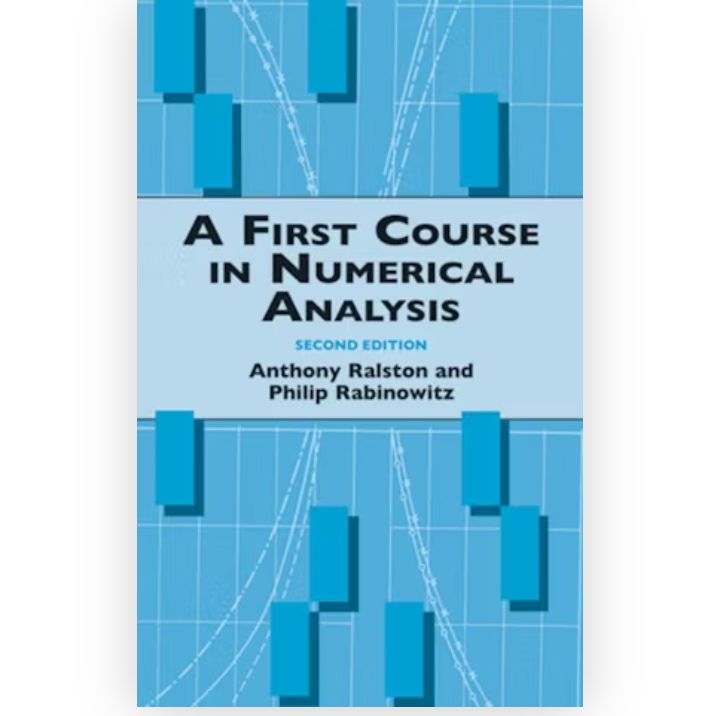
Numerical analysis is a branch of mathematics that deals with the development and application of methods for solving mathematical problems numerically, typically using computers. 

 Learning Outcomes

1. Understand numerical methods for solving equations and systems of equations
2. Apply numerical techniques for interpolation, differentiation, and integration
3. Analyze the accuracy and stability of numerical methods
4. Implement numerical algorithms using computational tools

Core Units
1. Root Finding Methods: Bisection, Newton-Raphson, Secant methods
2. Interpolation and Approximation: Polynomial interpolation, Splines
3. Numerical Differentiation and Integration: Finite differences, Quadrature rules
4. Solving ODEs: Euler's, Runge-Kutta methods
5. Systems of Equations: Gaussian elimination, Iterative methods

Sample Interactive Activities:
1. Simulation: Use Python to solve a nonlinear equation using Newton-Raphson
2. Group Project: Compare numerical integration methods for a real-world problem
3.Quiz: Identify the most suitable numerical method for a given problem 💡

Course Description: Dive into the world of calculus and unlock the secrets of change and accumulation. Explore limits, derivatives, integrals, and their applications.

Learning Outcomes:

1. Understand limits and continuity

2. Apply differentiation rules

3. Use derivatives to solve optimization problems

4. Evaluate definite and indefinite integrals

5. Apply integration techniques to solve problems

Core Units:

1. Limits and Continuity: Understand limits, continuity, and basic theorems.

2. Differentiation: Learn rules, techniques, and applications of derivatives.

3. Applications of Derivatives: Solve optimization, related rates, and more.

4. Integration: Evaluate definite and indefinite integrals.

5. Applications of Integrals: Areas, volumes, and real-world applications.

Sample Interactive Activities:

1.Limit Game: Guess the limit value as x approaches a point

2. Derivative Matching: Match functions with their derivatives

3. Optimization Challenge: Solve real-world optimization problems in groups

4. Integral Scavenger Hunt: Find and solve integrals hidden around the "room"

 Course Description:

 Dive into the world of calculus and unlock the secrets of change and accumulation. Explore limits, derivatives, integrals, and their applications.

Learning Outcomes:

1. Understand limits and continuity

2. Apply differentiation rules

3. Use derivatives to solve optimization problems

4. Evaluate definite and indefinite integrals

5. Apply integration techniques to solve problems

Core Units:

1. Limits and Continuity: Understand limits, continuity, and basic theorems.

2. Differentiation: Learn rules, techniques, and applications of derivatives.

3. Applications of Derivatives: Solve optimization, related rates, and more.

4. Integration: Evaluate definite and indefinite integrals.

5. Applications of Integrals: Areas, volumes, and real-world applications.

Sample Interactive Activities:

1. Limit Game: Guess the limit value as x approaches a point

2. Derivative Matching: Match functions with their derivatives

3. Optimization Challenge: Solve real-world optimization problems in groups

4. Integral Scavenger Hunt: Find and solve integrals hidden around the "room"